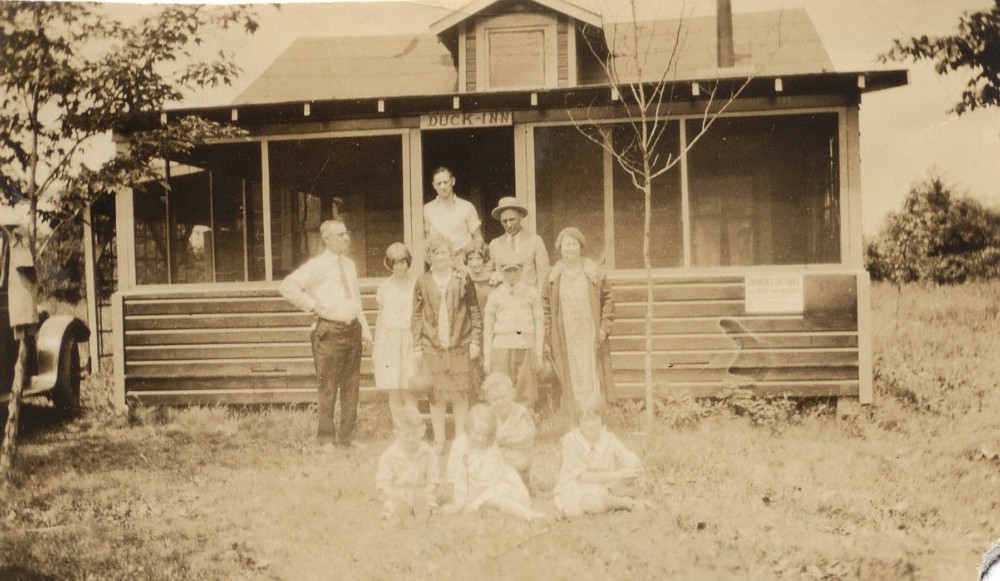


Jeremiah Hare
Jeremiah Hare, son of Thomas and Mary Hare, was the brother of our g-g-g grandmother Maria Hare Black. There is a question on his birth date: the Prospect Cemetery records state he was born in 1843, but that is probably not accurate given that he was not listed with his parents in the 1850 census at his would-be age of 7, and that would have made him only 19 years old when he enlisted and was given a Lieutenant commission. In the muster rolls I received from the National Archives, it states on the April 23, 1862 muster-in date that he is 30. The other dated January 25, 1863 says he is 34. So we can put his probable birth date between 1829 and 1832. This would also make sense because that would make him the oldest son, and he was made the estate executor by his father in the will of Thomas Hare.
His parents came to America in 1841, so if he was born between 1829-1832, he would have been a small boy and should have also arrived with his family, even though it is not mentioned in The History of Allegheny County, page 754. Maria Hare surely must have come with the parents, as she is listed on the 1850 census as having been born in Ireland. Unfortunately, an 1850 census record has not yet been found for Jeremiah.
He enlisted in the West Virginia 8th Mounted Infantry on April 23, 1862. As far as I can tell by the history of the W.V. 8th and his muster rolls, he must have been captured by the Confederates sometime in May, as he was absent/sick the whole month. He was in Culpeper, Va (says “Newcreek” on his muster roll) when he was absent/sick in May 1862. Here are some websites that mention Culpepper:
http://www.civilwartraveler.com/EAST/VA/va-central/piedmont.html
http://www.angelfire.com/wv/wasec9/
http://7wvcavalry.com/burials/http://www.wvcivilwar.com/union-regiments/7th-west-virginia-cavalry/
http://7wvcavalry.comhttp://blueandgraytrail.com/year/186205
Regarding his sick/absence in Newcreek and the proximity of a confederate prison where he might have been, here is an excerpt from Newcreek history during the Civil War that tells a story of where men were taken in 1864. This is two years later, but it demonstrates a good example of where Jeremiah might have been. The exempt after that describes the Libby Prison camp as being for officers, and the extremely harsh conditions:
http://www.wvgenweb.org/mineral/keycivil.htm
On 11-28-1864, a Confederate force under Gen Rosser managed by wearing some stolen blue Union uniforms, to penetrate Fort Fuller about 10 AM. They withdrew about 4:00PM. While there, they captured @ 400 Union soldiers and also private citizens, all who were taken to Libby Prison in Richmond. Among the citizens captured were – Andrew SHILLINGBURG of Elk Garden, I. D. CALDWELL, and Marshall M. SAYRE.On 11-28-1864, a Confederate force under Gen Rosser managed by wearing some stolen blue Union uniforms, to penetrate Fort Fuller about 10 AM. They withdrew about 4:00PM. While there, they captured @ 400 Union soldiers and also private citizens, all who were taken to Libby Prison in Richmond. Among the citizens captured were – Andrew SHILLINGBURG of Elk Garden, I. D. CALDWELL, and Marshall M. SAYRE.
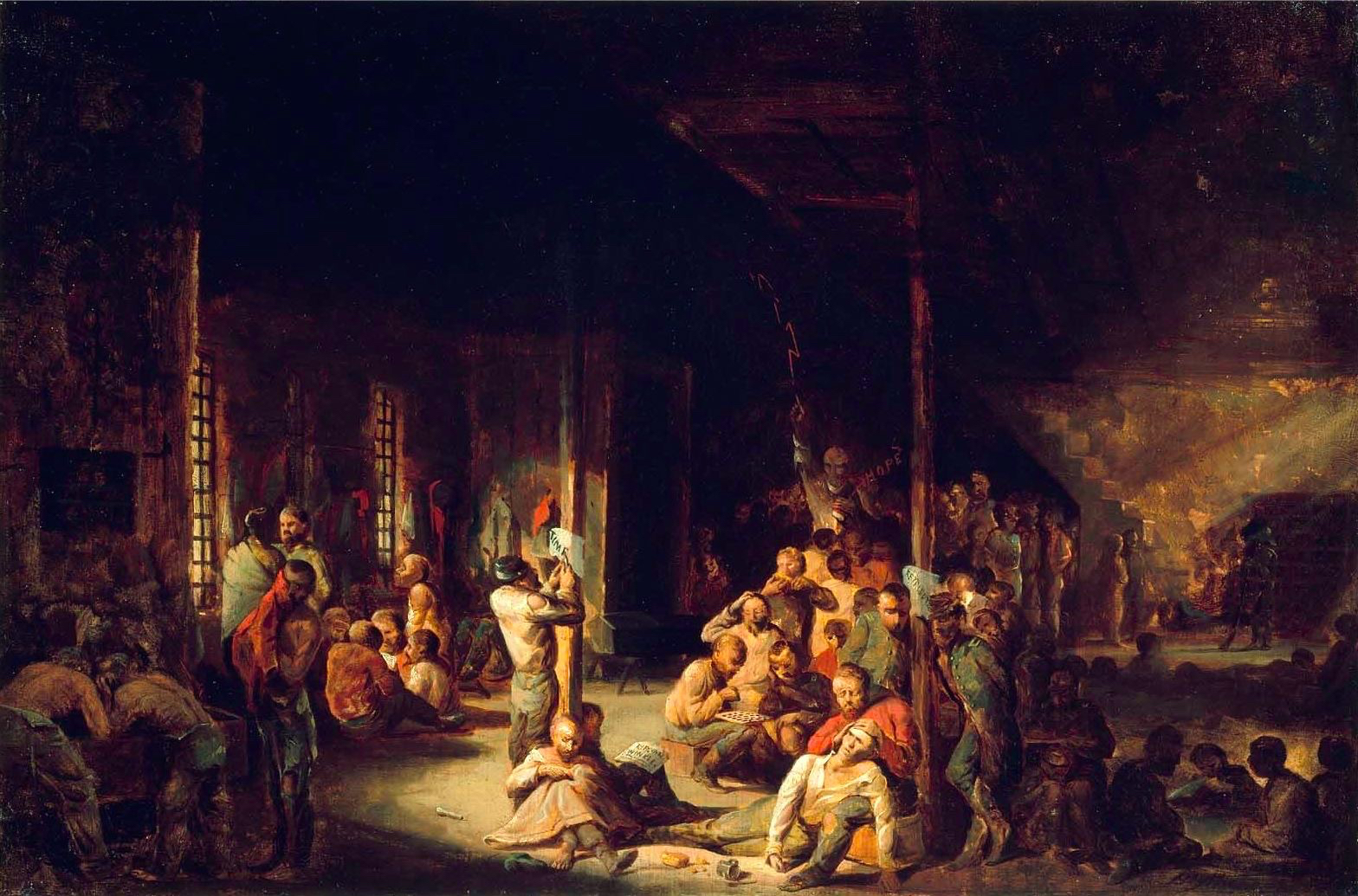
Depiction by David Gilmore Blythe
Libby Prison was a Confederate prison at Richmond, Virginia, during the American Civil War. It gained an infamous reputation for the overcrowded and harsh conditions under which officer prisoners from the Union Army were kept. Prisoners suffered from disease, malnutrition and a high mortality rate. By 1863, one thousand prisoners were crowded into large open rooms on two floors, with open, barred windows leaving them exposed to weather and temperature extremes.

He was back in service in June, July, and August of 1862 according to his muster rolls. Then on August 16, 1862, Jeremiah submitted his resignation because of “physical disability”. He also stated that “the hardship and privations I endured while a prisoner among the Rebels” was probably the cause of his illness. There is a statement by a surgeon finding him “incapable of performing Military duty because of Phthisis”. His resignation was accepted by the Army of the Potomac on September 10, 1862.

He probably never fully recovered, as he died March 5, 1865. He is buried in Prospect Cemetery, Tarentum, PA.